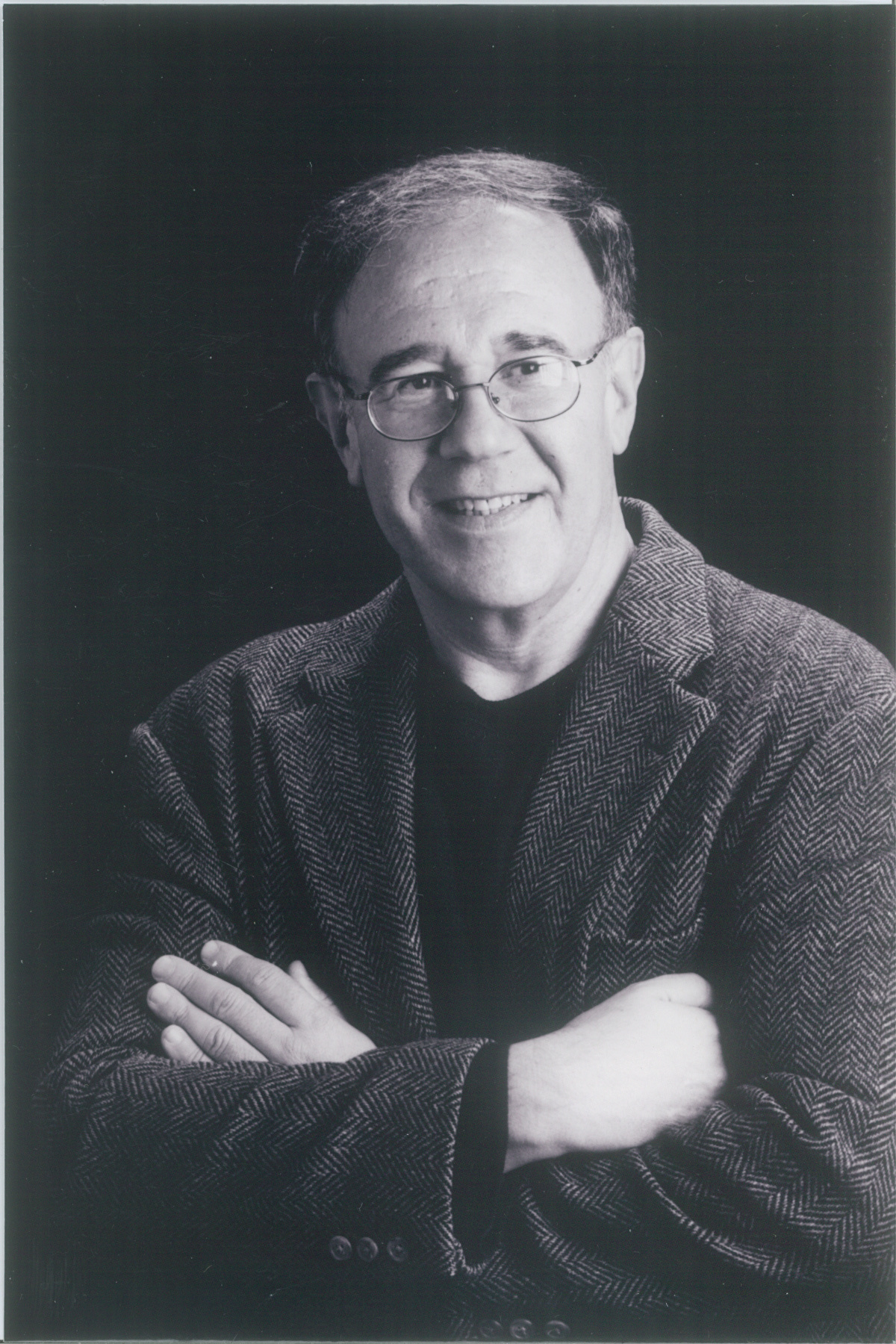
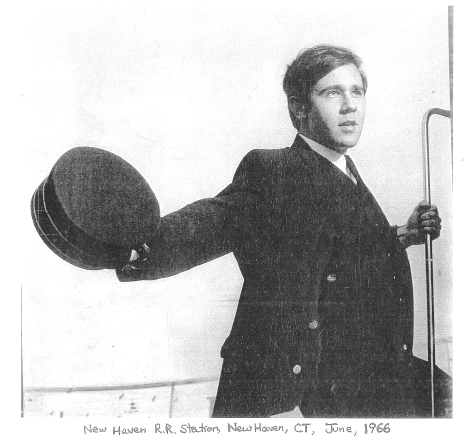
Photo of Jim Sleeper

On this site…

This site isn’t an interactive blog; it’s a discursive archive that walks you through selected columns, reviews, essays, and audio and video commentaries.

Please read the introduction, “Looking for America.” The rest of the site is in thematic sections: Click a heading here or scroll down to the one you want.

Some pdfs come up slowly. Please wait, or write jimsleep@aol.com to receive a pdf as an attachment, free.

A Sleeper Sampler Looking for America
A Civic-Republican Primer Latest Work
Liberal Education and Leadership Training The News Media, the Public Sphere, and a Phantom Public
Leaders and Misleaders Scoops and Other Revelations
Conservative Contradictions New York Nonsense, Civic Sense, and Urbanity
Folly on the Left Our Chattering Classes
Hebrews, Jews, and the American Republic Race: Why Skin Color Isn’t Culture or Politics

A Sleeper Sampler

These are some pieces I’m willing to be known by, for better or worse.

1. “Smarter and Tougher,” National Public Radio, September 13, 2001:

This 3-minute radio commentary on “All Things Considered” was delivered two days after 9/11. How well have these thoughts of that moment held up? The NPR commentary was adapted from a version I wrote on 9/11 and published in the Yale Daily News on September 12.

2. “Why Rudy Giuliani Really Shouldn’t Be President,” TPMCafe, March 8, 2007.

Posted when Giuliani was at the peak of his electability, this is emblematic of how I think about electoral politics and of the kinds of experience I draw from. The post was linked and commented upon widely enough to play some part in reorienting some opinion-makers’ perceptions of Giuliani.

3. Above the Battle: The Price We Pay, The Harvard Crimson, January 28, 1976.

This account of how I brought some white working-class veterans to hear James Baldwin at Harvard was written a year before I left Cambridge and moved to inner-city New York for what became a decade of immersion in black politics and community life. It was written 32 years before Barack Obama – in April, 2008 — characterized working-class whites, in a passing remark, in a way that stoked the class- and race-driven mistrust and incomprehension I encountered in the events described here.  Note: If you have trouble reading the pdf linked above (it gives you the original, as it actually looked in The Crimson), click this digital version instead.

4. “Duty Bound,” The American Prospect, 2006.

This is one of my typically countercyclical little essays (See “Looking for America,” the lead essay at left): In the summer of 2006, as everyone followed Ned Lamont ‘s anti-Iraq War bid to unseat Connecticut Senator Joseph Lieberman, I went to Yale’s Sterling Memorial Library to look up Lamont-family history. I found striking accounts of a long-forgotten, would-have-been uncle who’d given his life at age 21 in a submarine off Japan in World War II.

I portrayed Thomas W. Lamont II as a fata morgana of the American republic, a fading mirage of our civic virtue, “his sacrifice a requiem for the kind of citizen we’re losing not at the terrorists’ hands but our own.”

The essay was posted in The American Prospect, and I spun off some of it into a New York Times op-ed column that’s linked in the essay. 

5. “Gip, Gip, Hooray!” New Haven Review of Books, 2007

Ronald Reagan’s hold on the American imagination reflects but distorts a sobering truth: His “Morning in America” administered “a glorious euthanasia to the civic-republican spirit.” It’s one thing to romanticize the republic, as I did in “Duty Bound,” above; it was something else for Ronald Reagan to devote so much his presidency to stage-managing such romances in lieu of public deliberation about his policies.

6. “Manufactured Consent,” The Washington Monthly, 2001

Written just after the Supreme Court ruled for George W. Bush in the 2000 election, this remonstrance contemplated civil disobedience against what seemed a creeping coup d’etat. It’s one of my finest — or, at any rate, most impassioned — invocations of American civic-republicanism.

7. “Bush and the Bad-Boy Vote,” Los Angeles Times, 2000.

During the 2004 presidential campaign, this sketched a familiar undercurrent in electoral politics. I’d discovered a photo of Bush, making an illegal play in a rugby game at Yale, which no journalist had found because it appeared only in the yearbook of my Yale Class of 1969, a year after Bush had graduated. Some wondered if I’d doctored the photo and its amusing yearbook caption: A Japanese television crew taped me removing the yearbook from my bookshelf and opening it to the page with the photo and its original caption, the camera zooming in to confirm its authenticity.

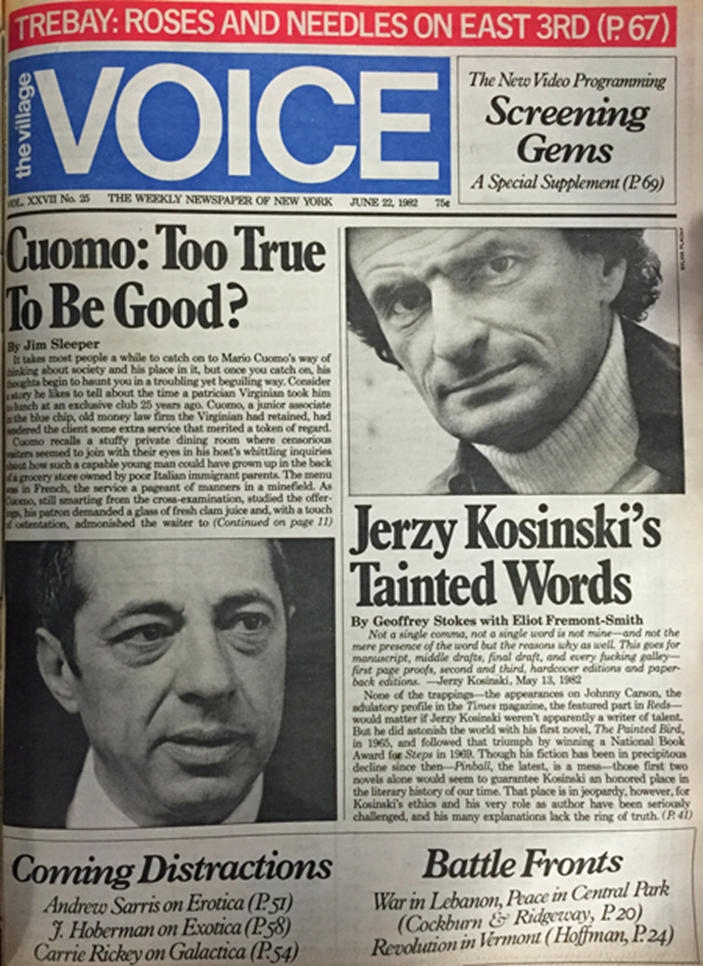
8. “What’s Really Wrong With Fred Richmond?” The Village Voice, 1982.

An idealistic young weekly newspaper editor recalls his delicate interactions with a wealthy, corrupt Brooklyn congressman in the early 1980s, revealing my own political premises at the time. After many twists and turns, I still find most of the moral and political coordinates of this piece useful, if painful.

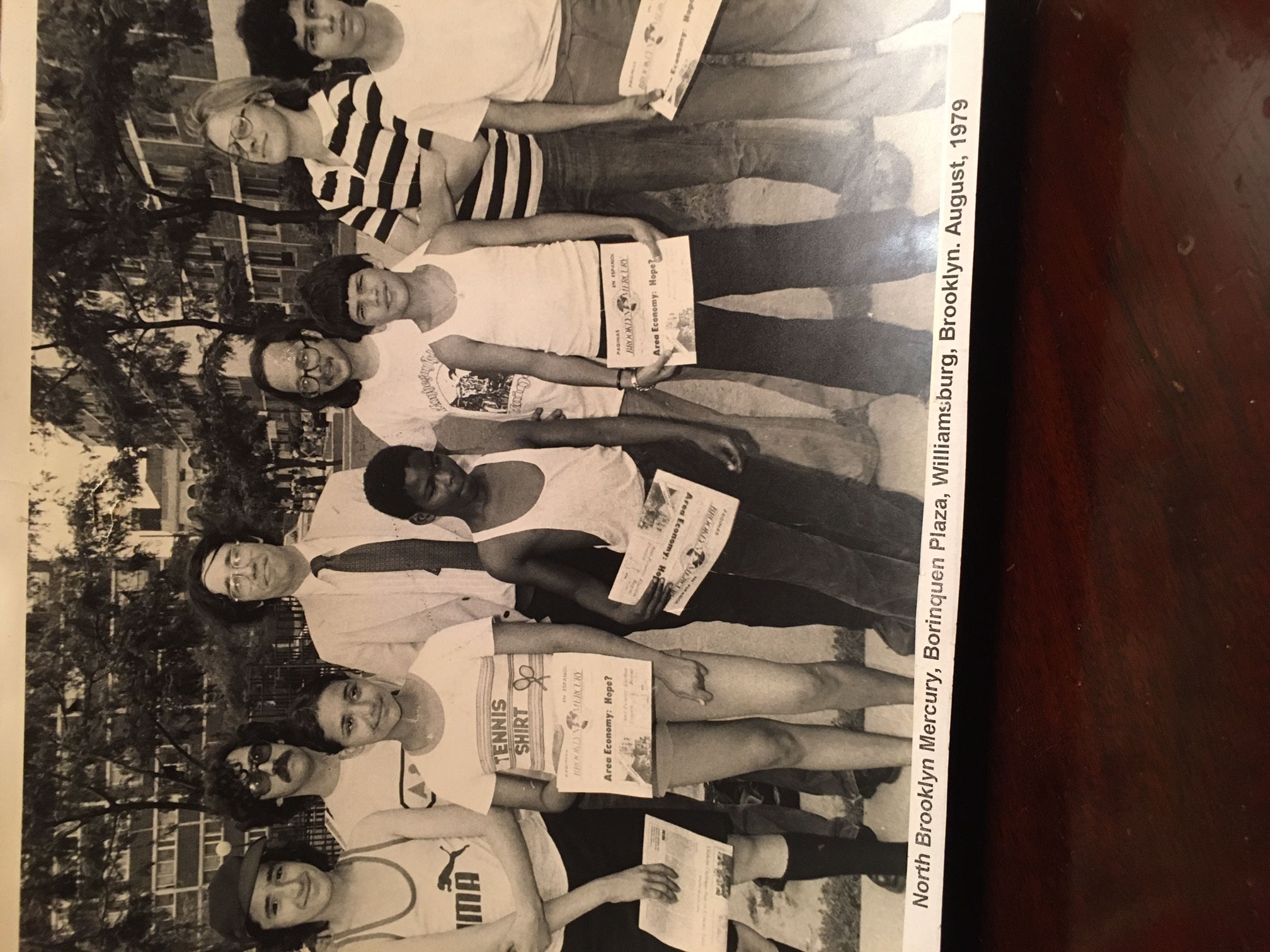
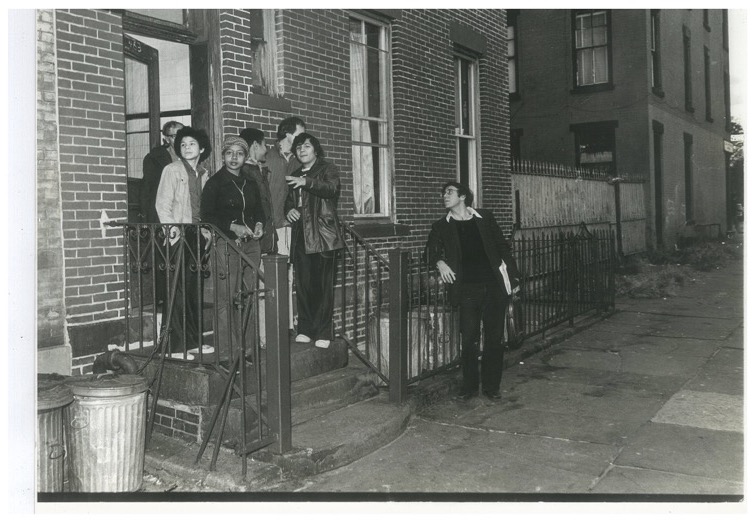
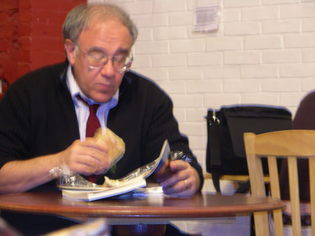
Here, also, are two never-before published photos, one of me in 1980 with the staff of my small weekly newspaper, The North Brooklyn Mercury (I’m the one wearing the tie). The other, taken by our staffer Joel Gallob, is of me conducting a 1979 interview with a Satmar Hasidic man whose leaders supported the congressman.

9. “Boodling, Bigotry, and Cosmopolitanism,” Dissent, 1987, reprinted in two anthologies, In Search of New York (Jim Sleeper, ed.) and Empire City: New York Through the Centuries (Kenneth Jackson and David Dunbar, eds.) an anthology of 400 years of writing about New York City.

New York City’s white-ethnic and Jewish “New Deal” political culture was expiring in late 1980s with the administration of Mayor Edward I. Koch, amid scandals and demographic upheavals that presaged the 1989 election of the city’s first non-white mayor, David Dinkins. This was my assessment of a city in transition. Subsequent developments were reported in New York Daily News columns and The New Republic, linked elsewhere on this site.

10. “Lessons From Lorena Bobbitt” New York Daily News, 1993.

About the dangers of vigilantism by the abused and about the comparative merits of civil disobedience when it’s possible.

11. “Orwell’s ‘Smelly Little Orthodoxies’ and Ours,” in George Orwell: Into the Twenty-First Century, (Thomas Cushman and John Rodden, editors), 2004

What George Orwell and Alexis de Tocqueville helped me to learn from my sorry sojourn in American journalism. Prepared originally for the Centenary Conference on Orwell at Wellesley College, May, 2003.

12. Tales of a Teenage Guru”, The Boston Phoenix, 1973

One of my first published essays, in a Boston “alternative” weekly, this was a lament for progressive “movement” politics after I’d watched a mass gathering of young followers of the teen Guru Maharaj-Ji. The allure of his “perfect wisdom” signaled decay in this country’s civic-republican synapses.

A Civic-Republican Primer

What It Is

Let me give the floor to a semi-anonymous commenter who posted this at TPMCafe in response to my comment that conservatives cannot reconcile their yearnings for an ordered, civic-republican liberty with their obeisance (sometimes ideological, sometimes lavishly “bought”) to every whim of capital, whose riptides disrupt the communities and  (small-”r”) republican virtues they claim to cherish.  A commenter identifying himself as ”Dan K” got me right and, more important, explained how civic-republicanism differs from liberalism and most of what passes for conservatism::

I understood Jim Sleeper’s point this way: The term “ordered liberty” is not supposed to be a synonym for some form of libertarianism, but a synonym for what is variously called “civic republicanism”, “civic humanism” or “classical republicanism”. The contrast between this outlook and the Republican approaches of today is that civic republicanism envisions an actual republic with an actual functioning government and an actual rule of law, placing some reasonable restraints on both individual and corporate behavior, but allowing a fairly high degree of liberty within that framework, and capable of organizing human energies in constructive ways to advance the public good. It also emphasizes the importance of an enlightened humanistic education and the cultivation of the intellectual and moral virtues necessary to turn the slavish and dependent human beasts fit only for life under despotic governments into self-governing and self-directed citizens.

Something like this ideal is supposed by some to be the founding constitutional ideology of the American republic, while others put more weight on a fairly similar England-derived classical liberalism. Civic republicanism is supposed to derive from various forms of Roman, and then Italian thinking about government.

“Obeisance to the whims of capital” is supposed to refer to the later capital-R Republican Party infatuation with laissez fair economics - an economically extreme manifestation of classical liberalism, and something much closer to what we now think of as “libertarianism”. The liberty here is seen by its critics as anarchic, disordered and fundamentally destructive of sustaining traditions and both public and private virtue. It elevates some men to positions of extreme power and unaccountability, and reduces others to servitude. It destroys the personal virtues of republican citizens, by tempting and corrupting them with the satisfaction of every base desire that unrestrained commerce can supply, and by reducing many citizens to the status of mere “workers”. It promotes debt and dependency over frugality and self-reliance. And by fostering tremendous inequalities in wealth, and the inequalities of power those bring, it makes it virtually impossible to sustain a society of self-governing, equal citizens.

Many neoconservative figures have purported to be defenders of civic republicanism, and indeed that is born out by some of their more philosophical writings which are very historically-oriented, and look back for political and moral models to the classical epoch and the ancient virtues. But neoconservatism as a movement and ideology is really quite different in character, and the civic republican rhetoric is a bit of a crock, dressing up plutocratic domination and civic irresponsibility in some film company classical costumes.

Domestically, neoconservative rhetoric amounted to little more than an excuse for cutting back social programs - supposedly seen as atithetical to the cultivation of republican virtues of self-reliance, industry and temperance - but without a program for building republican institutions, promoting citizenship, lifting people out of an impoverished and subordinated condition, extending competent self-government, devoting resources to the public good or reigning in the abuses of wealth.

And the whole domestic “republic” of neoconservative fantasy is yoked to a modern industrial state engine driven by the lust for power, aggrandizement and domination, and the satisfactions of the ego that go with them. It trumpets a quite different set of classical virtues - an arrogant Nietzschean dynamism, of the kind promoted by Robert Kaplan, that is quite alien to the modesty and conservatism of republican thought. The gulf between neoconservatism and civic republicanism is as vast as the gulf between the arrogant character Callicles in Plato’s Gorgias and the modest Roman farmer, or the stoic Marcus Aurelius.”

Major Papers on Civic Republicanism

In Defense of Civic Culture, The Progressive Foundation, 1998.

American National Identity in a Post-National Age, essay for One America?, an anthology, 2000

Should American Journalism Make Us Americans?, discussion paper for Harvard’s Shorenstein Center, 1998.

Religion In its Place, International Journal of Not-for-Profit Law, republished from a contribution to a symposium a the Maxwell School, Syracuse University, 2000.

Civic Manifestos and Threnodies

Civic Liberals and Race, Boston Globe, 1992

A D-Day meditation on my Dad’s generation, Daily News, 1994

Duty Bound: Portrait of a young civic republican, 1940, The American Prospect, 1996

By Gradual Paces, some warnings from the Founders and Edward Gibbon on the eve of Bush’s 2004 re-election, The American Prospect, 2004

Ronald Reagan as the Jack Kevorkian of the civic-republican body politic, New Haven Review of Books, 1997

Perfect Knowledge and Civic Decline, a meditation on the popularity of the teen Guru Mahara-Ji, The Boston Phoenix, 1973

What Jury Duty Should and Shouldn’t Be, Dissent, 2008

Liberal Education and Leadership Training

Liberalism depends on virtues and beliefs which the liberal state itself cannot nourish or defend. The counterintuitive lesson is that therefore liberal leaders have to be nourished all the more intensively somehow. (From “Yale’s Purpose,” below.)

Places like Yale and Harvard did that. They generated civic and political leaders at all levels, even some leaders of insurgencies. These crucibles of civic-republican leadership training were racist and sexist, and many of their privileged charges became merely dray horses of the financial, legal, and business worlds. Yet they did some things extraordinarily, deeply well, as I show below, especially the first review-essay from the Los Angeles Times.

If in the 1930s and ’40s you’d had to choose between Hitler or Stalin, on the one hand, and such Harvard, Yale, and Princeton graduates as Roosevelt, Acheson, Harriman, Kennan, and other framers of the Atlantic alliance and the postwar order, on the other, you’d have chosen the latter because of how they were nourished and trained. For all the stark differences between them and most Americans in class, race, and gender, they were accountable to civic-republican principles and processes without which the excluded could not have pressed their claims.

In 1964, I note in the first essay below, Yale President Kingman Brewster, Jr., a direct descendant of the minister on the Mayflower, gave one of the university’s honorary doctorates to Martin Luther King, Jr., then just released from jail. The honor was controversial within and beyond Yale. Yet something in Yale that was as old and deep as Brewster’s lineage enabled — indeed, drove — that step and many more. It’s important to understand this.

We haven’t understood. We’ve thrown the baby of civic-republican nurture and belonging out with the bathwater of the old national schools’ worst presumptions and prejudices. That was a mistake, as the sociologist Jerome Karabel found himself thinking (but not quite admitting) as he examined the pedagogy of exclusive college-preparatory schools like Groton that were feeders to Harvard and Yale.

The challenge is to open the doors to these crucibles of leadership training while continuing to nurture and discipline the new entrants’ republican commitments. “Diversity” is a means, not an end, and when it’s the latter, it too-easily becomes merely a skittish liberal dodge of the hard work that must be done. That’s about all it has been for years now at Harvard, Yale, and Princeton, which have compromised or all-but completely shed their civic-republican missions.

Training a republic’s governing elites, Los Angeles Times Book Review, 2004. This account of Yale Kingman Brewster, Jr.’s bold pedagogical innovations was written as a review-essay of Geoffrey Kabaservice’s The Guardians.

The Crimson’s Civic Slide, Boston Globe, Reviews of Ross Douthat’s em>Privilege: Harvard and the Making of a Ruling Class and Richard Bradley’s Harvard Rules , an expose of Lawrence Summers (both in 2005) and of Harry Lewis’ Excellence Without a Soul, about how elite universities are abandoning liberal education to create, as I put it, “a global ruling class accountable to no polity or moral code.”

Humanists and Warriors: How and How Not to Study Humanities at Yale, The Yale Politic, 2008

Where Liberal Education and Leadership Diverge, a meditation on “Jarhead” pedagogy in college, The Yale Politic, 2006

“Allan Bloom and the Conservative Mind,” New York Times, 2005, and letters from David Horowitz and Nathan Tarcov.

Allan Bloom, 20 Years Later, The Guardian, 2008

Leaders and Misleaders

Sketches of public leaders I know or have watched closely

Rupert Murdoch vs. the Republic, TPMCafe, 2007

George W. Bush and the ‘Bad Boy’ Vote, Los Angeles Times, 2004

Barack Obama as a candidate: These columns track his leadership strengths and weaknesses in several dimensions. (Additional columns on Obama are collected as “The Obama Chronicles” in the “Latest Work” and “Race” sections of this website):His Philadelphia speech about race and the Rev. Jeremiah Wright posed a fundamental American challenge to certain pundits and even certain Jewish activists. As Obama staggered under the Rev. Jeremiah Wright’s preening shortly before the Indiana and North Carolina primaries, some more historical and religious perspective were badly needed: Obama in the Wilderness, TPMCafe, April 29, 2008. Recent history has cancelled the value of Louis Farrakhan’s endorsement of Obama because younger blacks like Obama himself have moved on. Whites’ support is still up for grabs: Obama, Crowds, and Power, Feb. 13, 2008 (just after he’d won the “Potomac Primaries”), not least because of the growing econo-cultural divide among whites themselves Obama’s Biggest Weakness, February 6, 2008. Just after the New Hampshire primary, I was still undecided between Obama and Clinton, writing that If I Vote For Obama, It’ll Be Because…. January 8, 2008.

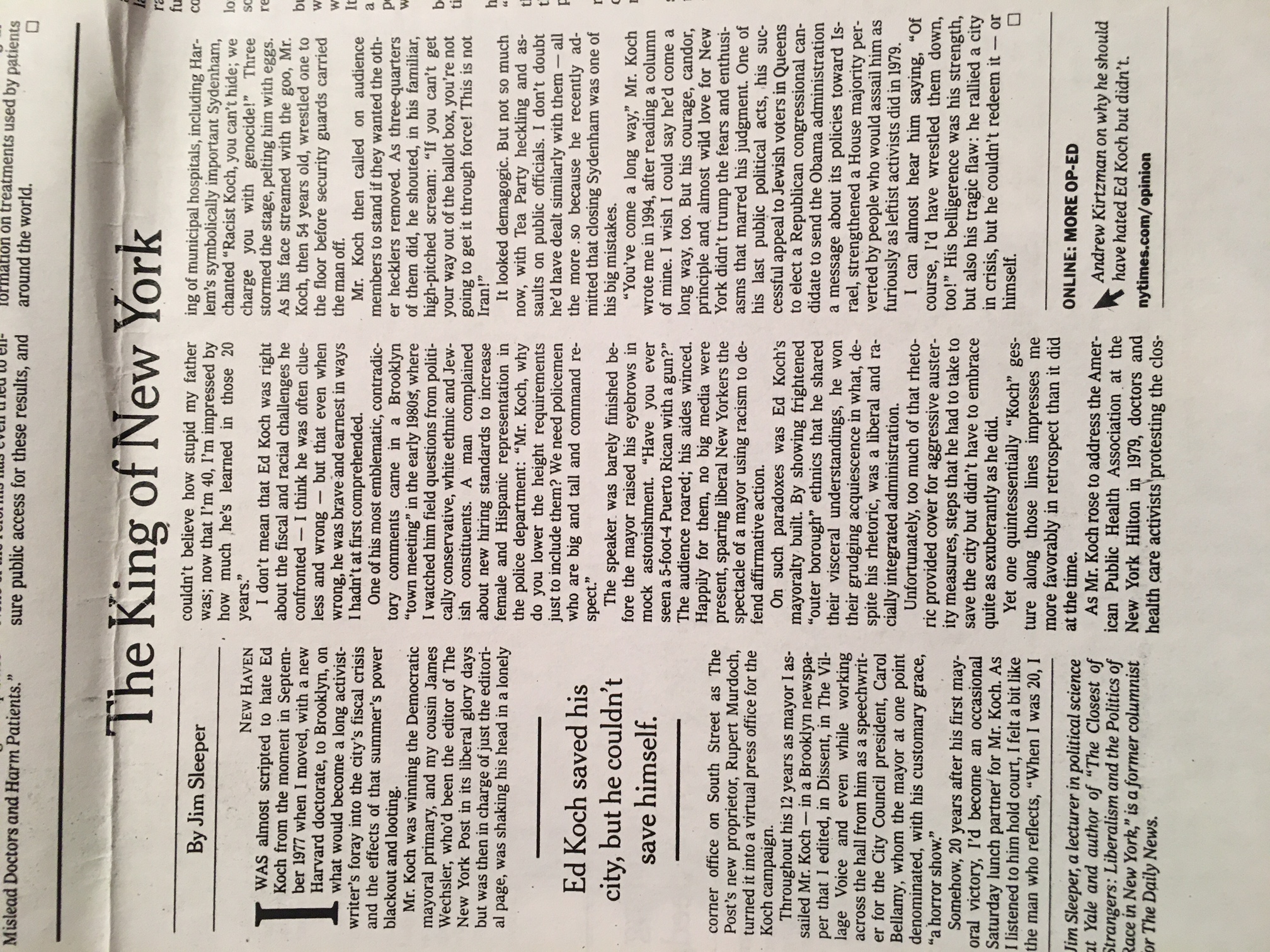
Ed Koch’s mouth and New York’s prospects, Dissent, 1981

Wealthy warlords and hapless idealists,Village Voice, 1982

Al Shanker and New York liberalism’s travails, Democracy Journal, 2008

Jesse Jackson’s miscarried promise, Washington Post, 1992

New York’s Giuliani-Dinkins mayoral contest, 1993, Daily News columns Note the third column, on the Rev William Augustus Jones, a precursor of Obama’s Rev. Wright.

Giuliani just before 9/11, New York Observer, 2001

Chicago’s Harold Washington, larger than life, even in death, Washington Post, 1992

Al Sharpton’s struggle to pick up the pieces, The New Republic, 1991

Ronald Reagan’s sweet songs of civic republicanism, New Haven Review of Books, 2007

Bill Bradley’s near-miss, The New Republic, 2005

Training civic-repubican leaders at Yale, Los Angeles Times, 2004

A teen guru lures American youth out of “the Movement,” Boston Phoenix, 1973

Goodbye Larry Summers, Without Regrets, History News Network, 2006, and a look at Harvard College during his presidency.

A Literary Prophet’s Bad Faith: TPMCafe, April 28, 2008. This assessment of Leon Wieseltier’s assault on Martin Amis  book about 9/11 in the New York Times Book Review shows not ony that it takes one to know one but also that envy and rivalry here are compounded by bad faith. 


Conservative Contradictions

American conservatism has many mansions and sects, but few conservatives can reconcile their yearning for an ordered, sometimes sacred, liberty with their obeisance to nearly every whim of capital. Far from being the Lockean expression of individual, creative work that conservatives claim it is, today’s corporate consumer capitalism pacifies and degrades individuals, and it subverts civic-republican dispositions and traditions more quickly than the left ever dreamed of doing. It also dissolves national sovereignty with a speed that confounds most conservative understandings of patriotism.

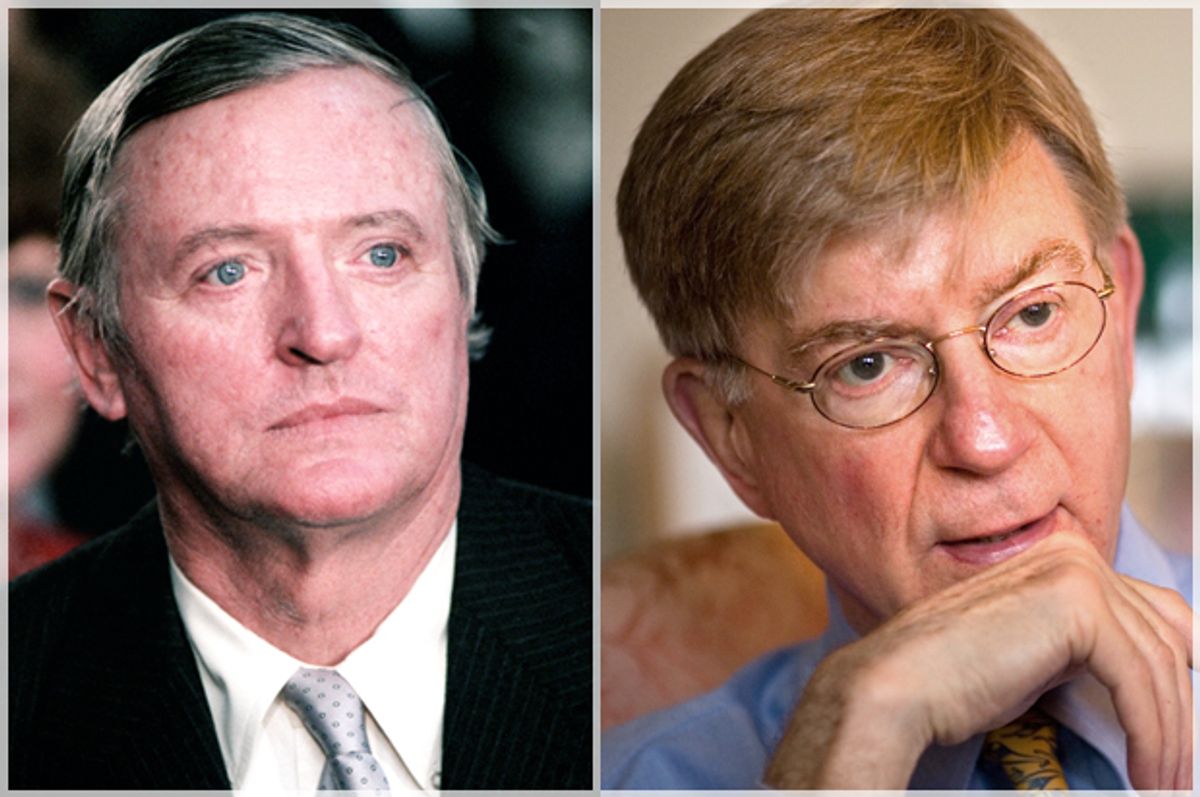
Whittaker Chambers told William F. Buckley in 1970 that one can’t build a clear conservatism out of capitalism because capitalism disrupts culture. Chambers wouldn’t have blamed this on the American conservative movement’s noxious neo-conservative cheerleaders, accelerants of republican decay though they may be, but on the central contradiction he’d identified within conservatism itself.

Libertarians may dismiss a lot of the “order” that other conservatives consider necessary; orthodox religious conservatives may work to impose doctrinal order on a fallen world, sighing occasionally like Dostoyevsky’s Grand Inquisitor about the sordid, often brutal consequences. But most of Americans aren’t like them and don’t like them.

Most conservatives keep on trying to reconcile capitalism and community values in symposia at elegant redoubts such as the Harvard Club of New York or the Hoover Institution at Stanford or by teaching the classics opportunistically, as in the Grand Strategy program at Yale, which I criticize obliquely in The Yale Politic below.

But most often these days, conservatives just wind up projecting their central contradiction, and the bourgeois self-loathing it often prompts, onto scapegoats, at home and abroad.

Capitalist markets should be honored in their place, as determined by a sovereign polity exercising republican vigilance. Profit-maximizing multinationals inevitably subvert such vigilance, and republics themselves, through anarchic consumer marketing and the seduction, corruption, and control of politicians, Republican and Democrat alike. (Not surprisingly, that makes Democrats easy targets for charges of hypocrisy, although, when you think about it, they’re not the real problem.)

Contradiction conservatives cannot and will not face the real problem. The tragedy is that many of them mean better. When honorable conservatives vow to rescue liberal education and liberal democracy from liberals, they intend sincerely to defend a classical, 18th-century liberalism that balances individuals’ rights to life, liberty, and property with the same individuals’ responsibilities as republican citizens, loving and self-disciplined enough to rise above narrow self-interest to care for the good of the whole.

Such conservatives know that a balanced society, like a healthy individual, strides on both a left foot of social education and security — without which conservatives’ cherished individuality couldn’t flourish — and a right foot of irreducibly individual freedom and responsibility — without which even the best social engineering turns persons in to clients, cogs, or worse.

A decent society shelters the spark and flame of individual dignity and conscience, but it cannot light that flame in the first place — or extinguish it, even if it kills the body. Readiness to light that flame originates in some kind of faith or natural law which even a republic’s “civil religion” cannot create or, ultimately, control.

Conservatives charge that liberals have lost sight of this sublime truth and have over-emphasized public provision, swelling the left foot and hobbling everyone’s stride. Most liberals haven’t a credible answer to this. The upscale amont them have done too well by the system as it is to attack its growing inequities with more than symbolic, moralistic gestures or subsidies that don’t resolve the problem. Yet they can’t bring themselves to defend the corporate dispensation wholeheartedly, either.

Sensitive to individual rights and sufferings, liberals want to strengthen the left foot of social provision without prescribing personal responsibility to society. For that they rely on outside incubators of virtues and beliefs which the liberal state itself cannot nourish or even enforce, committed as it is to liberal autonomy.

But that is the problem, too, of conservatives, who in America are really classical, “individual rights” liberals. However dysfunctional the left foot of social provision, the social mayhem rising all around us is driven by the seductions and stresses of corporate consumer marketing and employment. Today’s capitalism forgets or only opportunistically invokes Adam Smith’s theory of the moral sentiments and a civic-republican nationalism that might reasonably be elevated by serious “liberal education.”

Instead of taking these things as seriously as they claim to, conservatives careen incoherently between loyalty to a national-security state and subservience to a post-nationalist global capitalism that, far more than terrorism, is dissolving both the state and the republican virtues on which it depends.

Call Jesse Jackson and Hillary Clinton insufferable scolds, if you wish, but there is such a thing as “economic violence” that does eviscerate the villages that raise the children. Wall Street does subvert Main Street and morals.

The Neo-con Merry-Go-Round Runs Down…., TPMCafe, October 17, 2008. Tortured defections from McCain just weeks before the Nov. 4 presidential election tell the tale.

“Gip, Gip, Hooray!” How Ronald Reagan administered a glorious euthanasia to the civic-republican spirit, or tried to. New Haven Review of Books, 2007

So Near, and Yet so Far, TPMCafe, July 16, 2008. Two young conservative writers think that Republicans can earn the trust and support of American workers by changing their philosophy and governance. I ask, why not call, then, for a new alignment that transcends both main parties?

“By Gradual Paces,” The American Prospect, 2004; how conservatives are betraying the founders’ original intentions for the American republic.

Thucydiots, The American Prospect, 2004; “Humanists and Warriors,” The Yale Politic, 2007. How conservatives misconstrue the humanities and leadership training for a national security state within American republic.

Conservatives’ Conundrum — and Ours, TPMCafe, June 18, 2008. What’s gotten into George Packer? His account of “The Fall of Conservatism” in the May 26 New Yorker shows mainly how the chattering classes, liberal as well as conservative, avoid reckoning our civic-republican decline.

“Behind the Deluge of Porn, a Conservative Sea-Change,” 2006. This essay about what I called “the pornification of public space,” written for the 40th anniversary issue of the quarterly Salmagundi, was reduced and adapted for the Dallas Morning News, where it got a lot of reaction from members of the Christian right, a lot more of it positive than I’d have expected.

Neoconservative chickens coming home to roost, The Guardian, 2007, a potted history of their misconceptions and missteps, occasioned by some essays and a lecture by New York Times Book Review editor Sam Tanenhaus late in 2007.

“American Conservatism’s Original Sin,” I wrote in TPMCafe, 2007, grows from its inability to reconcile its yearning for a sacred, ordered liberty with its obeisance to every whim of capital.

“Allan Bloom and the Conservative Mind,” New York Times Book Review, 2005.

How Norman Podhoretz conflates America with himself, Los Angeles Times Book Review, 2000

“The Manchurian Columnist” and “The Two Brookses,” History News Network and The American Prospect, 2006. How David Brooks, purveyor of neoconservative wisdom to New York Times liberals, gets himself more tangled up than Houdini.

“The Wiley E. Coyote Conservatives,” The American Prospect, 2006 What will it take for conservative-movement pundits in pursuit of liberal subversion on campuses to realize they’ve fallen off the cliff? This was posted as well on CBS News’ website.

An uncharacteristic neoconservative squeamishness about American intervention abroad. The Bennington Review, 1982. Anyone who has followed neoconservative drumbeating for an aggressive American foreign policy will be amused but also outraged by this 1982 account of their complacency about a brutal, anti-Semitic dictatorship’s violations of human rights.

War hawks and the ghosts of left-liberalism past, TPMCafe, , a rebuke to both conservative and liberal champions of the Iraq war who can’t stop blaming their blunders on a powerless left. See also “Hawking War Guilt,” The Nation, November 12, 2007

. Arthur Sulzberger’s Cracked Kristol Ball, TPMCafe, 2008 and At Times Op Ed, the Plot Sickens,./a> About what neoconservative field marshal William Kristol brings to the Times opinion page.Condom capers and parents’ rights, Daily News, 1994


The perils of pro-life violence, Daily News, 1995

See also, “Book Reviewing as Ideological Policing,” in the section, “News Media, the Public Sphere, and a Phantom Public” on this site.

Folly on the Left

I’ve been there. I’m not much there now, except sometimes by default. My civic-republican compass points rightward sometimes, but at bottom I believe that neither “left” nor “right” as we know them in America is a vessel of hope. See “Looking for America,” the introduction to this site.

Many blunders by Marxist ideologues have left us with a taboo against criticizing capitalism, whose twilight they announced rather too often. But aren’t we now in a relationship to capitalism analogous to that of American colonials to the British monarchy and mercantilism of the 1760s? Most colonists then still professed affection for and reliance on the crown and empire, even as they began to sense that British interests couldn’t be reconciled with their own. Eventually they decided to risk their lives, fortunes, and sacred honor to rearrange matters.

So now, too, perhaps, something basic has to change in how we configure and charter the vast profit-making combines that are degrading the rhythms and security of our daily lives and incapacitating us as cultural actors and free citizens.

Like most Americans of the early 1760s, we would rather not face this daunting challenge. So we tolerate a growing burden of distractions and distempers, eroticizing our pain or projecting it violently and expending tremendous energy on false solutions.

Left and right alike need to rediscover the American civic-republican tradition and to sacrifice ideological as well as physical comfort to revive it. But some on the left, like some blacks who cling to the old, racist coordinates within which they have long endured, can’t contemplate revising and re-grounding their critique of capitalism in a republican tradition that’s better than the bourgeois mystification of oppressive social relations they think it is.

“Folly on the Left,” This review-essay on Paul Hollander’s Political Pilgrims (Salmagundi, 1983) touched on the tendency of activists, left as well as right, to turn distant lands into giant projection screens for their unexamined fantasies of tribal and ideological solidarity.

Why Isn’t the Left Able to Deliver?, New York Observer, 1988

The Left’s Wrong Turns in the Politics of Race, Tikkun, 1991

The social failures of “money liberalism,”<em> Newsday, 1992, a review of Mickey Kaus’ The End of Equality

Forgetting Henry Wallace, the real third-party candidate of 1948, History News Network, 2002

Hebrews, Jews, and the American Republic

I am working now on themes suggested by this section’s headline but only sketchily anticipated in the published work below.

Here I’ll just note that in 1492 Spain’s Ferdinand and Isabella not only sent Christopher Columbus on his voyage of discovery but also expelled Spain’s Jews northward into Europe and eastward into the Ottoman-ruled Levant, and that in Holland the aftershocks of that expulsion set off interactions between Hebraism and Calvinism that — from Spinoza to Hebrew-spouting Puritans in New England and beyond — would birth the American Republic in part of Columbus’ New World.

America’s Hebraic and Calvinist roots were tangled problematically from the beginning, and in some respects they’ve gone their separate ways. Yet they remain inseparable in this country even if each has been twisted even further — by George W. Bush, a wayward legatee of the Calvinist strain, and by Jewish neo-conservatives, wayward legatees of the Hebraic one.

We are still only beginning to acknowledge the extent to which the republic’s early depths and energetic expansion implicate and vindicate Jews as what George Steiner called the West’s “moral insomniacs” and the “unwitting catalystis and interlocutors of the darkest impulses of man” — a condition beyond blessing or curse that must be reckoned with anew.

This website’s introductory essay, “Looking for America,” mentions briefly my own early immersion in some Hebraic and Calvinist currents that are now carrying me toward a book about them and America. The pieces below are merely small soundings in those currents that shouldn’t be taken too seriously as indicia of where my thinking about America is going.

Alan Dershowitz as a Jewish “Race Man”, Reconstruction magazine

How Black and Jewish demagoguery misread America, two Daily News columns, 1993 and 1994

How Black demagoguery misreads Jews., The Nation, 1991

An ancestral connection to the disaster in Iraq, The Jewish Weekly FORWARD, 2007

Why neoconservatives found anti-semitism in Argentina tolerable, The Bennington Review, 1982

How to really put Louis Farrakhan’s Endorsement of Obama to rest. TPMCafe, March, 2008

Looking for America

An account of this site’s main theme and of how I came to it.

Lots of unflattering things are said about Americans, and for lots of good reasons. But every so often people in this country do things that strike me as appealingly “American” in ways I sketch and try to explain in the materials collected on this site.

It’s a truism that many Americans did such things on 9/11, notably in New York. Many more do them less dramatically every day, usually with so little public notice that we have to remind ourselves that a republic’s strength depends on what ordinary people do when no one’s looking. A republic has to assume that a significant minority of its citizens take certain values to heart enough to live by them and that they have enough self-discipline to do it without being policed.

Early in 2008, Barack Obama’s speeches revived such assumptions in a big way, across many of the usual partisan and ideological lines. He seemed to embody certain “American” qualities that fascinate many around the world — not our immense wealth or power (which can be trashy and brutal, and which we’re squandering), but an egalitarianism that still inclines most Americans to say “Hi” to anyone rather than “Heil” to a leader; to give the other person a fair shot; and, out of that kind of strength, to take a shot at the moon.

Such inclinations don’t come from nowhere, and they may not survive. I don’t fear that the American republic is sliding toward fascism, as some on the left think, or that it’s sliding toward communist totalitarianism, as some conservatives warn. Far more likely (and just as frightening) is a muddled dissolution of the civic-republican fabric, as happened in ancient Rome.

Is that happening? A republican way of life waxes or wanes in what Tocqueville called the slow and quiet action of society upon itself, the little daily interactions that count for as much as high moments of national experience and decision. Sustaining a disposition to give the other person a fair shot and even to back her up as she tries depends on keeping a balance of values, virtues and body language which the literary historian Daniel Aaron called “ethical and pragmatic, disciplined and free.”

You can see that kind of American civic-republican grace in a team sport when a player closes in on the action, not to show off but to back up a teammate and help him score. You can see it in the ways people who are deliberating in a contentious meeting decide to extend trust cannily, in ways that elicit trust in return, or in the ways that people whose friendships have been strained give each other the benefit of the doubt. Or maybe you don’t see that kind of grace so often anymore; maybe backbiting, road rage, and the growing degradation of public space and prime-time fare prompt quiet heartache or a sense that something cherished but nameless has slipped out of lives together in society. Without the civic balance I’m sketching, this country can’t survive as a republican project that, for all its flaws, has nourished seeds of its own transcendence and pointed beyond its patriotism and its borders.

Giving American civic grace a better description than I have so far requires not just hard analysis but also some probing and poetry, some fakery and a lot of faith. You can develop an ear and an eye for it, and maybe a voice for it. I’ve been at it one way or another since around 1970, when I was 22. Sometimes, I get it right, and people tell me so. Sometimes, I don’t, and people tell me that, too.

This website is culled from more than 2000 columns, essays, reviews, posts and appearances in print and electronic venues, including a few books such as Liberal Racism and The Closest of Strangers, and a couple of anthologies.

The rest of this introductory essay gives you some assumptions and experiences that guide my work. Beyond that, the pieces linked throughout this site will speak for themselves. In some sections I’ve added additional introductory thoughts  — on journalism, race, conservatism, and the left. Bur first let me say a little more about what I assume and what I reject, and about how I came to believe what I do.

[Read more →]

Latest Work

These are added as published and, when no longer current, are moved to the appropriate thematic sections on this site or to my archives offline. 

How Summers at Treasury Would Beggar the Republic, TPMCafe, Nov. 11, 2008. The former Harvard president’s hyper-neoloiberalism would subvert civic-republican virtue, that’s how. We need deeper reform than he would bring.

What I’m Learning (Slowly) From Obama, TPMCafe, Nov. 11, 2008. A columnist’s confessions.

“I, Barack Hussein Obama, do solemnly swear….” TPMCafe, Nov. 9, 2008. Why he should use his middle name at the inauguration, and how his full name vindicates what is still exceptional about America. A similar version ran in the  Yale Daily News on November 14.

Don’t Gloat — Organize. Dissent, Nov. 6. Part of a special issue of pieces, “The Day After,” by Dissent editors, including Michael Walzer, on the election.

Burdens of History, Reconciliation, and Fatality.  TPMCafe, Nov. 5, 2008 A victory night reflection on what we and Obama face — and on why he seems so deeply well equipped to face it.

Thoughts on Casting a Vote in New York City at 6 am, TPMCafe, Nov. 4, 2008

How to Gauge Racism in This Election, TPMCafe, Oct. 28, 2008. Don’t ask Jack Shafer, Slate’s blowhard press critic, who thinks that liberals, enraptured by Obama, are just getting jittery. A viral e-mail I got clears things up.

My Hidden State in an Obama Win, TPMCafe, Oct. 27, 2008. Whether or not it succeeds on November 4, Obama’s candidacy has come to represent and confirm positions I’ve taken on racial politics for years.

Things We Don’t Talk About When We Talk About Race, Dissent, Oct. 27, 2008. Eight days before election, everyone is talking about whether “the Bradley effect” will sink Obama’s apparent lead.

A ‘Sad’ Reckoning That Isn’t, TPMCafe, October 26, 2008. How not to think of McCain nine days before the election.

The Neo-con Merry-Go-Round Runs Down…., TPMCafe, October 17, 2008. Tortured defections from McCain tell the tale.

A Pundit Fails the Republic, TPM Cafe, October 13, 14, 2008. As the presidential election approached, David Brooks, liberal editors’ favorite conservative, parried and then ducked the truth that John McCain had proven himself unstable and incompetent as commander-in-chief of his own campaign. Serious conservatives such as Christopher Buckley told it like it is. 

Don’t Just Hold Your Nose, TPMCafe, October 2, 2008. Now that the Senate has sweetened and porked up the bailout, it will pass, but will damage republican principles even more than the earlier version did.

Senators, Beware! TPMCafe, October 1, 2008. Hours before the Senate’s scheduled vote on a bailout package, reponses from sober bankers, professors, and policy analysts to my column of last night were surprising and seemed to warrant another column.

Why a Second Bailout Bill Should Fail, TPMCafe, Sept. 30, 2008. Not that I expected it to….

John Quixote, Sarah Panza, and the Windmills of 2008, TPMCafe, Sept. 9, 2008. How McCain and Palin are blaming the wrong elites in this election.

“Yoo Es Ay! Yoo Es Ay!” TPMCafe, September 6, 2008. The Republican tragedy in John McCain’s acceptance speech.

What Sarah Palin Offered in her Convention Debut — and What it May Cost, TPMCafe, September 4, 2008

Another One Bites the Dust, TPMCafe, August 28, 2008. Princeton historian Sean Wilentz, a Hillary Clinton dead-ender, had to be ushered off the stage the night that Bill Clinton made clear that Barack Obama is ready to lead.

The Neo-con on Your Shoulder, TPMCafe, August 26, 2008. Why commentator David Brooks has become the Vladimir Posner of American neo-conservatism, especially during presidential elections.

What Biden Brings, TPMCafe, August 23, 2008. This was written just before Obama’s introduction of Biden and the latter’s speech in Springfield, which fulfilled my anticipations here. Now the other shoe will drop, and Biden will put his foot in his mouth a few times this fall. But he’s a great choice, all things considered, even if he’s not the answer to the fundamental challenges I raised in the column before this one.

It Won’t be Obama’s Veep Who Saves Him, TPMCafe, August 22, 2008. Written the day before Obama announced his choice of running mate, this piece went looking for what seemed the missing fire in his belly.

Has Obama the courage of black voters’ convictions? TPMCafe, August 8, 2008. A congressional election in Memphis was a win-win-win opportunity for Obama to endorse the white incumbent, against a black challenger — and in a majority-black district! But he didn’t do it. This is also a case study of where 1982 amendments to the Voting Rights Act went wrong.

Intellectual Usury Feels Good, at First, TPMCafe, July 20, 2008. Punditry, perversity, and the foreclosure crisis.

Changing the Debate — For Real, TPMCafe, July 18, 2008. This continues the arguments of the previous post, focusing somewhat on the deep and pervasive taboos against criticizing corporate capitalism and our two-party system. I see Republicans as Whigs, circa 1858, but, so far, there is no credible leadership pointing beyond both parties, unless Obama can actually do it.

So Near, and Yet so Far, TPMCafe, July 16, 2008. Two young conservative writers think that Republicans can earn the trust and support of American workers by changing their philosophy and governance. I  dout it, and I ask, why the crises of capital that are converging on working people, especially, during Bush’s final months don’t discredit both parties and justify  a new alignment that transcend both — not in this November’s election, which we all hope will produce the next Roosevelt, but beyond it.

Conservatives’ Conundrum — and Ours, TPMCafe, June 18, 2008. What’s gotten into George Packer? His account of “The Fall of Conservatism” in the May 26 New Yorker shows mainly how the chattering classes, liberal as well as conservative, avoid reckoning our civic-republican decline.

Obama: Neoliberal or Civic Republican? TPMCafe, June 13, 2008.  He’s really a bit of both, I argue, and he has the capacity to vindicate the Republic against the worst of global capitalism. Whether he will depends on whether our national economic and social crises deepen — and on what people seem ready to hear.

Obama in the Straits, TPMCafe, June 5, 2008. As Obama claimed the Democratic nomination after the last primaries, a meditation from abroad on the racial dimension of the challenge and the opportunity his candidacy has put before the country and the world.

Obama in the Wilderness. TPMCafe, April 29, 2008. As Obama staggered under the Rev. Jeremiah Wright’s preening shortly before the Indiana and North Carolina primaries, some historical and religious perspective. 

A Literary Prophet’s Bad Faith: TPMCafe, April 28, 2008. This assessment of Leon Wieseltier’s assault on Martin Amis  book about 9/11 in the New York Times Book Review shows not ony that it takes one to know one but also that envy and rivalry here are compounded by bad faith. 

Obama’s Way Out of the Race Trap, TPMCafe, April 23, 2008. After losing the Pennsylvania primary, Obama had to re-connect with working-class whites. I suggested that calling for class-based affirmative action would turn a lot of heads and gain a lot of ground electorally and for social justice.

How Republicans Gamed the Pennsylvania Primary, TPMCafe, April 22, 2008

The Ur-Story Behind Obama’s ‘Cling’ Gaffe in PA, TPMCafe, April 16, 2008. His problem with working-class whites is deep, though not his fault.

Why Obama’s Leftist Critics Are Sputtering,TPMCafe April 3, 2008.

Obama’s racial wisdom vs. holdouts left and right, TPMCafe, April 1, 2008. Both conservative black writers like Shelby Steele and many leftists academics are misjudging his campaign and his motives.

The Campaign We Really Need, TPMCafe, March 28, 2008. A clarification concerning the column just below this one.

Billary’s One-Two Punch Has Changed the Game, TPMCafe, March 26, 2008. How the Clintons became a part of American democracy’s problem, not the solution. A few unfortunate phrasings left this one open to both innocent and willful misreadings. Please read it with “Obama, Crowds, and Power,” here below, and with “The Campaign We Really Need,” above.

In Philadelphia, Obama’s Historic Challenge, TPMCafe, March 18, 2008. And, in Brooklyn, a lit of history behind controversies like the one for Obama’s Pastor Jeremiah Wright.

Spitzer’s Non-Prosecution, as Perfect as a Perfect Crime, TPMCafe, March 12, 2008. That he self-destructed doesn’t leave his investigators with clean hands.

The Spectre Haunting Spitzer’s Inquisitors, TPMCafe, March 11, 2008

How to Really Put that Farrakhan Endorsement to Rest TPMCafe, March 4, 2008. Why no “furor” over Farrakhan is likely to fly, even though some people will keep trying to launch it.

Obama in a Valley of Insinuations and Lies: A desperate historian’s attack, TPMCafe, February 27, 2008. A real meltdow.

Obama, Crowds, and Power, TPMCafe, February 13, 2008. Written just after Obama won the “Potomac Primaries, a cautionary note.

Obama’s Biggest Weakness,
TPMCafe, February 6, 2008. Written as returns from SuperTuesday were still coming in.

Why it’ll be Obama vs.McCain, TPMcafe, February 2, 2008 Written just before SuperTuesday. Here I was behaving as an anthropologist more than a partisan. Many readers were not amused.

David Brooks Scurries to McCain…. via Ted Kennedy! TPMCafe, January 30, 2008

Giuliani: Should We or Shouldn’t We? The Tallahassee Democrat,
January 24, 2008. This in the daily newspaper of Florida’s capital just before Rudy Giuliani’s make-or-break bid for the Republican nomination in the state’s GOP Primary of January 29. It is adapted from my TPMcafe column of March, 2007, Why Rudy Giuliani Really Shouldn’t be President,

If I Vote for Obama, It’ll Be Because… , TPMcafe, January 8, 2008, Posted the morning after his second-place finish in the New Hampshire Democratic Primary.

Arthur Sulzberger’s Cracked Kristol Ball,<em> TPMcafe, January 6, 2008
and At Times Op Ed Page, the Plot Sickens TPMcafé, January 8, 2008. Why the New York Times’ “fickle and perverse” Times’ publisher made a leading neoconservative apparatchik an op-ed page columnist, and what that costs the paper’s credibility.

Jury’s Out, Dissent, Winter, 2008, in a collection of short essays prompted by Tocqueville’s remarks on the jury system.

Teaching Toughness,<em> Democracy Journal, Winter, 2008, review of Richard Kahlenberg’s Tough Liberal, a biography of teachers’ union president Albert Shanker

Scoops and Other Revelations

The freedom to break “news” energizes journalism and democracy, but breaking new ideas often matters even more. Without them, the sheer glut of information would scramble old ways of thinking without generating any of the interpretations and public consensus we need to make sense of the news.

That presents journalists with a challenge. Reporters writing on tight deadlines have to rely on whatever story lines they already have in their heads, and these are yesterday’s conventional wisdom, making their “story” sensible enough — and saleable enough — to harried editors and to readers or viewers who want their preconceptions confirmed or at least accommodated.

But what if the events being reported defy and confound the conventional wisdom, as the attacks of 9/11 surely did? Serious journalists, like serious public leaders, try to lead as well as follow. That’s why journalism is called “the first rough draft of history.”

Journalists are looking not just for “news” but for better interpretive lenses or story lines that notice and explain new trends and challenges that the old wisdom overlooked. To make sound judgments quickly about what really matters as “news” in a maelstrom of new developments, they need to draw on historical memory and thinking that’s deep as well as clear.

Here are seven instances in my own experience where a little historical memory and some informed judgment benefited me and the public.

1. Exposing Election Fraud in an Historic Black Congressional Race.

The first instance is the most conventional. It was the first time I understood how to break news. It came on a Saturday morning in 1982, when I walked into the Brooklyn Board of Elections as a Village Voice writer and found supporters of Brooklyn State Senator Vander Beatty “checking” voter registration cards.

What they were really doing was forging signatures on the cards, which Beatty’s lawyers would then submit to a judge as evidence of fraud in his suit to invalidate a congressional Democratic primary election for the retiring Rep. Shirley Chisholm’s historic Bedford Stuyvesant seat, which Beatty had just lost to a far more worthy State Senate colleague, Major R. Owens. Beatty was going to submit his minions’ Saturday morning forgeries as evidence that Owens had rigged the votes on Election Day.

I hadn’t just stumbled upon those shenanigans at the Board of Elections. A political operative who knew people on both sides had called to tip me off. He didn’t need to explain much on the phone: A Voice cover story of mine on Beatty’s long record of corruption had been published before the primary and had played some role in Owens’ victory. Yet if I hadn’t rushed down to the Board that Saturday and known what I was seeing, Beatty would have won his suit in Brooklyn’s compliant (indeed, complicit), machine-dominated judiciary. Black politics in Chisholm’s district would have taken an emblematically disastrous turn. So a lot was at stake in the new Voice story the following Wednesday. “Look at it this way,” said my tipster; “[Beatty] is either going to jail or he’s going to Congress.”

A classic povertycrat long indulged by a corrupt Democratic machine and a timid white liberal elite, Beatty had been endorsed in the primary by the New York Times. The party machine’s hack judges did rule for him in the local and appellate courts, but, thanks partly to my reporting and the controversy that ensued, New York’s highest court overturned the rulings. Owens, who said he felt as if he’d been in Mississippi throughout the ordeal, went to Congress, served honorably, and retired in 2006. Beatty was convicted in federal court a few years later of corruption unrelated to his election scheme. In 1990, he was assassinated by a non-political rival. It’s all in four stories linked here.

The experience of trying for months to alert others to Beatty’s malfeasances taught me that even bona-fide scoops may not interest most news media if the news comes from the wrong side of the tracks and its larger implications aren’t clear. Only after the Times’ Sydney Schanberg read the Voice report and alerted the rest of the world in his op-ed page column did the Times, the courts, and the Democratic Party show any inclination to do what all of them supposedly had been established to do in the first place.

I learned that a truth-teller has to persist against conventional wisdom and indifference. Sometimes only an advocacy journalist inflamed by commitment to an insurgent cause will keep at it long enough. Even a highly professional journalist may lack motivation and adequate resources unless he or she makes a strenuous effort to summon them.

I learned, too, that even persistence may fail if the writer hasn’t enough historical memory and sound judgment to find the “story” in the deluge of impressions. People will resist facing even an incontrovertible piece of evidence if its implications are counterintuitive and therefore “make no sense”. That’s what happens when readers lack an interpretive story line that explains why the facts matter. For that, they have to trust the journalist to “break” sound new ideas as well as news itself. In the Beatty case, selling the story meant shattering white indulgence of black corruption by persuading readers of the need for reformers like Owens.

2. Blocking a dubious indictment of a future national leader.

The truth that there were serious flaws in the preparation of a pending indictment of New York Congressman (now Senator) Charles Schumer in 1982 fell into my lap wholly through a conflict of interest of my own that made it a hard story to report. Indeed, I wound up having to report it not as a journalist but as a lonely citizen, writing unpaid guest columns for a small Brooklyn weekly, The Prospect Press.

I couldn’t tell the story in the Village Voice because I’d stumbled upon fellow Voice writers’ involvement in driving an indictment of Schumer, whom they disliked for not being “progressive” enough. It was they who’d urged his prosecution upon an ambitious and receptive young U.S. Attorney for Brooklyn, Edward Korman, who’d recently brought down Congressman Fred Richmond, as described in one of the Voice essays linked in “A Sleeper Sampler” and elsewhere on this site.

My Voice colleagues and the prosecutor were pursuing the case for moralistic and personal reasons with scant legal justification. I knew this only for a reason that undermined my own credibility, though: My girlfriend was working in Schumer’s office and was giving me the other side of the story.

Not surprisingly, the only people inclined to believe my account were those who had reasons of their own to distrust the Voice muckrakers and/or the U.S. Attorney. To grasp the injustice of the case, one had to shed the righteousness of “white hat” muckrakers, and one had to know that the criminal justice system itself is highly susceptible to abuse if its skeleton of laws lacks a “cartilage” of extra-legal trust and integrity among prosecutors.

My columns in the small neighborhood weekly were handed around and played a role in alerting people in the Justice Department and the courts to the flaws in the indictment. It was dropped before being formally brought, but only after a lot of publicity and controversy.

Twenty five years later, I had a reason to tell more of the story of “the Schumer case” in 2007,when Schumer, by then on the Senate Judiciary Committee, was investigating the Bush Administration’s efforts to politicize U.S. Attorneys’ prosecutions of Democrats.

Again, the “cartilage” of trust and professionalism had worn thin, but by 2007 I must have been the only reporter to recall that Schumer had been the victim of a politicized prosecutorial investigation. Ironically, back in 1982, the probe had been instigated not only by partisan Republicans but also by leftist muckrakers, and it was closed down by senior Reagan Justice Department officials after Schumer’s attorney, Arthur Liman (later the Democratic counsel to the congressional Iran-Contra commission) went to Washington and confronted them with the bizarre truth about the inquiry.

3. Exposing a journalist’s primary colors.

In 1996 I was nursing a strong hunch that Joe Klein, then a prominent Newsweek columnist and television pundit, was the anonymous author of the novel Primary Colors, his roman a clef about Bill Clinton and his circle.

I first claimed that Klein was “Anonymous” in William Powers’ Washington Post media column, and I kept insisting on it even after Klein’s vehement denials had convinced the media that he wasn’t the author. (“It wasn’t me; I didn’t do it,” he told CBS News flatly, just as CBS was taping me insisting it was Klein. CBS didn’t run that part of its footage.)

I wrote a column that opened, “May I remind Joe ‘I didn’t do it’ Klein of O.J. Simpson’s vow that he will ‘leave no stone unturned’ until he finds Nicole Brown Simpson’s killer?…. If Klein didn’t write Primary Colors, let him devote his far-more-considerable investigative skills to finding the author.” No one would publish it. (I was freelancing at the time; this was well before blogging.)

Months later, a reporter discovered the novel’s original paper manuscript with Klein’s handwriting on it. What had made me so sure of his authorship? Again, memory and judgment played a part. Having read Klein’s columns in New York magazine in the late 1980s, I remembered his characteristic locutions and obsessions about liberals and race – tropes that popped up in the novel.

When I saw an op-ed column in the Baltimore Sun by David Kusnet, a former speechwriter for Bill Clinton, voicing similar suspicions, I re-read the novel, and more of Joe Klein just leapt off the page. So I called Bill Powers, who described the “Kusnet/Sleeper theory” of authorship. Klein left me an exasperated voice-mail message: “Jim, I don’t have a patent on the word ‘Yikes’!”

Again, though, as in the Beatty case cited above, most journalists had accepted KIein’s denials and weren’t as open as Powers to a literary cross-examination. We were in a gray area, where I “knew” the truth thanks to memory, some literary acumen, and political judgment. When Klein, exposed by his manuscript, confessed his authorship at a press conference with Random House’s Harry Evans, I was there in the crowd of reporters and, in a Wall Street Journal column soon afterward (linked above, with the Powers column) I offered my interpretation of why he’d lied so vigorously and what I think was at stake for journalism and politics in the lie.

4. Somewhere over the Rainbow

Most of my work involves not breaking news but trying to scope out societal learning curves, a little ahead of their time. The matter of how our interpretive frames rise and fall is as interesting as the facts we weave into those frames. As a Daily News columnist in the summer of 1993, I “knew,” not from polls but from years of immersion in black and white-ethnic neighborhoods in the city’s outer boroughs, that Rudolph Giuliani would defeat New York’s first African-American mayor, David Dinkins, in that fall’s election.

The Daily News columns I wrote about the mayoral campaigns became pretty insistent and combative, cutting against the conventional grain, as in the Schumer and Klein stories.

After Giuliani won, I enlarged my frame of reference and analysis by comparing New York’s electoral upheavals with those in other cities. A cover story in The New Republic was the first time that my breaking a new interpretation rather than just news became national news in itself.

That set off a four-year-long train of columns, reviews, and appearances in which I challenged some liberal as well as conservative racial thinking. Some of that thinking was racialist in an obsessive, sometimes piously doting way that tends to reinforce racism itself; some of it was ideologically leftist and reductionist in assigning blacks revolutionary roles.

Almost all such bad thinking presumed that having a skin color automatically means having a “culture.” In 1997 I wrote Liberal Racism against that assumption. The book prompted interviews on NPR and with The Atlantic , and many debates, plunging me deeper into arguments and acrimony, sometimes on Charlie Rose and in NPR commentaries, sometimes in the columns, essays, and reviews filed on this site under “Race” with additional reflections on the subject.

One scoop in this vein required visiting the Rockefeller Foundation archives in Tarrytown, NY to look into the background of Prof. Leonard Jeffries of the City College of New York, whose diatribes about Jewish complicity in the slave trade had been fanning a spark of truth into a political conflagration. I read letters and memos written by Jeffries’ early funders and enablers and wrote a not-wholly unsympathetic column in the
Race Doctors at City College, Daily News, in 1993, but in The Nation I admonished some on the left for indulging him.

5. Another side of September 11, 2001 – and of November, 1948.

Bringing memory and judgment to bear on news sometimes yields small discoveries that others persist in ignoring. Shortly after the ordeal of New York firefighters on 9/11, I noticed that their department emblem, the Maltese Cross, is a relic of medieval battles between the Knights of Malta, who were Christian Crusaders, and Muslim Saracens trying to block their way to the Holy Land. That seemed a haunting precedent given George W. Bush’s brief characterization of the confrontation with Islamicist terrorists as a “crusade.” But, perhaps because he hastily dropped the term and the implicit analogy, no one ever mentioned the fire-fighters’ Maltese Cross. To read about it, scroll down to the third column on this link, from The New York Observer.

Similarly, Republican Senate Majority Leader Trent Lott’s fateful praise in 2002 of Strom Thurmond’s racist, Dixiecrat presidential campaign of 1948 against Harry Truman unleashed a deluge of commentary about the implications of that campaign, which nearly cost Truman the election to Republican Thomas Dewey. But no 2002 news analysis or commentary about the 1948 election mentioned an important “fourth party,” this one on the left, that had also endangered Truman by drawing away liberal Democrats just as Thurmond was drawing away conservatives.

When the History News Network published my account of the Communist-backed presidential bid of Henry Wallace, who had been FDR’s vice-president for a term, nothing happened. No news analyst or columnist who’d written about the 1948 campaign made a correction. The silence seemed a result of sheer dissonance, given the eagerness to nail the racists Thurmond and Lott, but also perhaps a touch of professional embarrassment at having missed the full story of Truman’s near-defeat.

6. Forebodings about the New York TimesI found myself writing about journalism itself in a Daily News column in 1994 that explained why the New York Times’ then-editorial-page editor Howell Raines was bad for the paper and for journalism.

I said it again at length in 1997 in Liberal Racism, in a chapter called “Media Myopia.” But only 10 years after the News column, when Raines was consumed by the scandalously false reporting of Jayson Blair on his watch as executive editor, were my intuitions confirmed. Raines is a talented man with gargantuan flaws, including a penitential Southern anti-racism that gets tangled up in its own moralism, as I’d argued in 1994.
By the time of his editorial demise in the Blair affair I was no longer at the News, but I did write an “I told you so” in the Hartford Courant (it follows the Daily News column in the link here) that was linked at sites such as Slate and reprinted, even in the Jerusalem Post, which had its neo-connish reasons for highlighting a crisis at a liberal newspaper.

7. The cheapest kind of flattery.

The Raines flap had an ironic twist that prompts a final observation: Interpretive scoops that break new ideas as well as facts are very easily stolen. When 18 paragraphs of a Washington Post review I’d written of Marshall Frady’s biography of Jesse Jackson wound up under someone else’s byline a few weeks later in the San Francisco Chronicle, the reasons were instructive, if depressing.


News Media, the Public Sphere, and the Phantom Public

Editors and reporters of print publications can’t fairly be blamed for tidal changes in technology, demographics, and ownership that have cost them so many readers. But under these pressures, some editors and reporters are acting in ways that make their newspapers deserve the deaths they’re dying.

It’s not something to shrug off; it’s a tragedy, in the strictest classical sense. We still need news organizations that adhere to certain codes and have enough resources and public legitimacy to make those codes stick. How have some journalists who used to know this forgotten it?

Although the first “Sleeper Sampler” piece on this site is a National Public Radio commentary and some others are blog posts and links or references to past appearances on Charlie Rose and PBS’ News Hour, my journalism began when newspapers were the carriers of democratic hope. From the civil-rights movement’s finest hours in the early 1960s through the Watergate exposes of 1973, journalists rode high as tribunes of the people, their newspapers the most trusted resources for fateful public deliberation about national policy and destiny.

Writers such as Walter Lippmann discounted such high expectations as early as the 1920s, doubtful that mass media could generate anything better than “manufactured consent” by busy or gullible audiences. But during the later period I’ve just mentioned, brave print reporters and editors proved Lippmmann wrong, and televised imagery of civil-rights demonstrations and the Vietnam War helped them break through the fog of rationalizations and lies.

Even when the big dailies of the time did “manufacture consent” and behave as sycophants to established power, independent-minded citizens turned to “alternative” weekly and monthly newspapers and magazines for information and interpretations vital to reform (and revolutionary) movements, much as activists now turn to TalkingPointsMemo.com or Daily Kos.

I remember people rushing to newsstands in Boston and New York on Wednesday evenings or Thursday mornings in the early 1970s to buy copies of the Village Voice as it tumbled off delivery trucks. I was thrilled to become a writer of Voice exposes and interpretations in the early 1980s and, before then, a writer for The Boston Phoenix and other alternative weeklies where Joe Klein, Sidney Blumenthal, Janet Maslin, and other national journalists also got started. Half a dozen of those Voice and Phoenix pieces are on this site.

We veterans of print’s glory days have since endured the conglomeration and co-optation of alternative weeklies and watched the souffle-like collapse of proud dailies into witless titillation machines chained together by conglomerate bean counters. So forgive us if we expect that blogsites will face hard fights to stay independent and open to all comers. Let me explain this prediction — and hedge it a little, with some samplings here from fights I’ve fought.

[Read more →]

Race: Why Skin Color Isn’t Culture or Politics

“Constraining us to define our citizenship and even our personhood more and more by race and ethnicity in classrooms, workrooms, courtrooms, newsrooms, and boardrooms, today’s liberalism no longer curbs discrimination; it invites it. It does not expose racism; it recapitulates and, sometimes, reinvents it. Its tortured racial etiquette begets racial epithets, as surely as hypocrisy begets hostility. And it dishonors’ liberals’ own heroic past efforts to focus America’s race lens in the 1950s and ’60s, when conservative pieties about color blindness concealed monstrous injustices.”

– Introduction to Liberal Racism, 1997

Almost every white person in America has a “first time” encounter with blackness. I’m not talking about the very first time a white person actually meets a black person, or about a first encounter with non-whiteness of some other kind. I’m thinking of the first time that a white American (or an American who passes for white or identifies with being white) encounters racial blackness as the emblem of a monstrous evil and its repercussions — the African-American slavery that was “lathered into the foundations” of the American republic, as Roger Wilkins put it.

The first, unnerving encounter with that kind of blackness – and some whites’ flight from such encounters – skews every American’s understanding of race and certainly complicates its place in our collective imagination.

One reason why other societies treat race more fluidly and ecumenically than ours is that, for three centuries, our national identity has used race to color-code a deeper contradiction — the one between our proclaimed civic-republican, Tocquevillian values and our actual practices.

The more the American republic has prided itself on vindicating universal ideals against mythic, ethno-racialist loyalties to blood and soil, the more the republic’s failures at this have driven some Americans to seek succor and self-justification in loyalties to racial and tribal camps — as well as in religious consolations that sometimes excuse or sanctify the failures instead of challenging them.

Such loyalties and false consolations slide up to and into a person with seductive warmth. The colder and thinner the larger civic culture, the more redemptive they seem. And the more un-American they are.

Here’s my account of my own first encounter with blackness and these bittersweet truths. It came in 1976, when I was a graduate student with a night job teaching mostly white, working-class veterans at a junior college in Cambridge, Massachusetts. One evening I took my class to hear James Baldwin speak at Harvard. You can imagine the painful intersections of class and race and culture in that room …. or maybe you can’t, in which case this Harvard Crimson account will help.

In 1977 I carried the revelations of that night into a decade-long immersion in black inner-city Brooklyn. Or maybe it was those revelations that carried me, a young New England civic-republican moralist, into a New York approximation of Orwell’s “down and out in Paris and London” odyssey. For a decade I lost and found myself in black, Hispanic, and white-ethnic neighborhood life, politics and journalism.

Many of my assumptions and sentiments about race dropped away or were wrenched away as I lived through links and conflicts across race lines. (Some of this is recounted in the introduction and other passages of The Closest of Strangers, and more of it in the second half of an essay linked elsewhere on this site, “Orwell’s Smelly Little Orthodoxies, and Ours.”)

Some of my left-leaning assumptions about racial identity survived my years in Brooklyn and citywide journalism. But older civic-republican dispositions and principles survived better. I learned — and, in some pieces linked here, I argue — that only a civic culture that’s thick enough to live in on its own race-transcendent terms can carry Americans past our dangerous tendency (and, often, temptation) to make race the arbiter of personal identity, cultural belonging, and national destiny.

[Read more →]

New York Nonsense, Civic Sense, and Urbanity

“New York is the most fatally fascinating thing in America. She sits like a witch at the gate of the country.” — James Weldon Johnson, 1909.

Since 1977 I’ve written too much about New York City to even begin to think about sorting through it now, but these pieces come fondly to mind, and for good reasons. What James Weldon Johnson said a century ago is still true. I daresay that the following pieces capture some of that truth.

The thundering, rolling democracy of the New York Subways in the 1990s, Washington Post Travel section, 1998.

Jackie Gleason’s Brooklyn, Newsday, 1987, an elegy on the occasion of his passing.

“Putting Out the Bonfire,” a Bronx cheer for Tom Wolfe, Lear’s, 1990.

Urbanities, inanities, and writers’ betrayals of the civic culture. New York Observer, 1988

Ed Koch’s mayoral mouth and New York’s travails, Dissent, 1981

New York just after 9/11, Daily News, New York Post, New York Observer

“The Rebuilding Of New York-leans,” The American Prospect, September 23, 2005 Hurricane Katrina’s devastation of New Orleans made some New Yorkers ask, “Haven’t we been here before?”
The column was also on CBS News website.

“Boodling, Bigotry, and Cosmopolitanism: New York in the 1980s,” Dissent, 1987, reprinted in In Search of York (Jim Sleeper, editor), a splendid anthology Empire City: New York Through the Centuries (Kenneth Jackson, David Dunbar, editors)

“Rebuilding the Ghetto Does Work,” a quick Daily News rebuttal in 1994 to a New York Times article that had claimed that it doesn’t.

Urban elites, developers, and civic purposes, The Nation, a review of Roger Starr’s The Rise and Fall of New York City,, 1985

New York on 9/11 (Daily News, New York Post, New York Observer)